Mystical Hymns and Dances
a. "Wa Fedāy Manzelgāt"
One summer as Ostad was completing the 40th day of his ascetic fasting in the mountains of Sheykhān, a dervish nearby, seized by a state of spiritual rapture, began supplicating his Lord. Overwhelmed by the dervish's sincerity, Ostad was inspired with this prayer and melody:
Wa fedāy manzelgāt Ali
Pāy sheykhānet bām
Nazr-e tchāwakey Ali
Jām jahānet bām
Dīnem dīna, shām Khoshīna
Shād bāy (ke) shādem kardanī
Wa pāy Shender Kū Ali feyzem dādanīMy all I will give when I find You, O Ali
I found You at Sheykhān1
My all I will give for those eyes, O Ali, which behold the universe
My religion is The Religion, my King is Shāh Khoshīn
Rejoice, O You who have filled me with joy
At the foothill of Mount Shender,2 O Ali, You granted me grace.
Ostad Elahi used to say: “True prayer consists in praising God: worshipping Him, supplicating Him, submitting to His will, regardless of the words used, the names given, or the manner in which He is invoked.”
The melody begins with a typically Kurdish rhythm consisting of three notes, which can be interpreted as 2 x 5 beats (3 2 2 3). The musical architecture then becomes increasingly complex as other themes come into play, echoing one another, interacting, melting, and giving rise to an entirely new melody. The performer plays with the elements and constantly rearranges them, yet the overall impression is one of deep unity.
b. Improvisation on Tchapī
Tchapī ("alternating steps") is a Kurdish dance tune in which the steps alternate between forward and backward. Tchapī’s theme arises in a natural way from the developments of the preceding melody, alternating with other tunes on slower beats and other patterns reappearing throughout the whole improvisation. The transition from a slow rhythm to a faster one is revived and guided to its peak through passages of great virtuosity, consisting of a progression of chords in the high register. The piece concludes with a return to the original rhythm. This tune is suggestive of communicating with God, which for some may take the form of a dance. As Ostad has said, “Each individual enters into an intimate dialogue with his Creator according to his or her own particular mood. . . .”
1 The shrine of Soltān Eshāq, where Ostad would often travel on pilgrimage.2 Mount Shender is located near the shrine of Soltān Eshāq.
Mystical Hymns and Dances
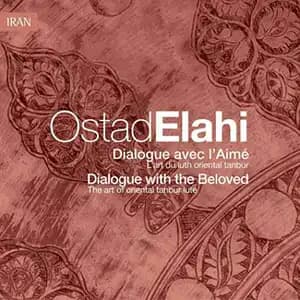
Dialogue With The Beloved