Qara Chūpī Suite, and its Samā introduction
The term Samā can have two meanings: either “audition” in the sense of spiritual audition, or “cosmic dance.” According to the great Persian mystic and poet Mowlānā Rūmī, “The Samā is only a part of the eternal dance that the soul is destined to join someday. Every creature partakes in this cosmic dance. . . .”1 Based on Ostad’s description of the universal process of perfection that animates all of creation, this piece is inspired by a beautiful choreography: from the initial descent from the Source to the ascending movement of return that lifts beings to their perfection, every level of creation is involved in this celestial dance.
Translated literally, Qara chūpī (qara: black, chūpī: dance), means “dance in black clothes.” This dance is performed by some Iranian Kurds when a close relative passes away. The apparent mortuary symbolism of this piece is strangely in contrast with its lively tempo, and one may wonder why Ostad has linked a mourning dance to the celestial dance of Samā, which is an exultation of life in all its forms, a life that is endless and eternally in motion.
1 Quote by Jean During, Musique et extase, Albin Michel, 1988, p.200.
Qara Chūpī Suite, and its Samā introduction
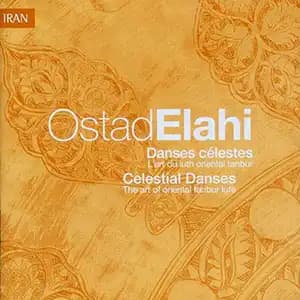
Celestial Dances