
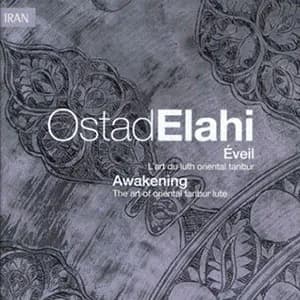
Sārū Khānī Suite (Monājāt)
This piece starts with an improvisation on the Sārū Khānī Suite, but in a special tonality due to the tuning of the instrument in fifths instead of the usual fourths, which makes it difficult to perform. This passage is followed by a supplication in the Bābā Jalīlī mode, a favorite of Ostad Elahi. Here, Ostad exceptionally sings the first verses of a poem in Kurdish by Sheykh Amīr.1
Hey Dīn, Ali, Ali, yā Ali
Delay gonāhkār yā Mowlām, yā Mowlām, yā Mowlām
Delay zabūnbakht, Ali Ali Ali
Āy cha azal gonāhkār, yā Ali
Ar cha rūy azal Mowlā, Mowlām Ali, ay Djānam, ay Dīnem ay, ay Djānam, ay Ali
Mowyāī borda-bār, hey Mowlām, hey Mowlām Ali, Ali
pey chīsh makaftī, hey Mowlām amān, hey Ali, Ali Ali
Dūr tcha qāpī yār, hey Dīnem, Ali Djān, Ali DjānO sinner heart, how weak and destitute
Sinner since the dawn of creation
If only you had shown more patience at the outset!
How you have lacked respect and patience,
What have you done to distance yourself from the divine abode?
Ali, Mowlām (my Lord), and Djānam (my Beloved) are all different ways of invoking God. The invocation (zekr) that prolongs and completes this prayer was inspired to Ostad in the 1940s. It reminds the soul that everything is in the hands of its Beloved, and that He alone can solve all problems.
Ali āmān yā Ali
Dakhīlem wa to Ali
Moshkelgoshā-ī Ali
Hall-e moshkel-ī AliAli, help, O Ali
You are my support, Ali
You alone can unravel difficulties, Ali
You alone can solve difficulties, Ali
1 Sheykh Amīr was an 18th century Kurdish mystic. Following a sudden spiritual awakening, this illiterate shepherd composed numerous poems with deep spiritual meaning and rich symbolic imagery.
Sārū Khānī Suite (Monājāt)
Awakening