Saharī Suite in the Farangī Tune
This piece was recorded in Ostad Elahi’s home in Tehran on the occasion of a visit by a group of Kurdish devotees from his native region in western Iran. The atmosphere of the gathering was so warm and spiritual that Ostad played the tanbur for a long time, which was quite unusual. This track reproduces part of that session.
The piece starts with a brilliant introduction of the Saharī Suite, a melody that used to be played at dawn to awaken dervishes and stir the soul. What makes this introduction remarkable is that it is played with a tuning in seconds instead of the usual fourths, which requires special skill and casts the melody in an unusual light.
The first voice that appears is that of a singer (kalāmkhān) who was renowned for the quality of his Saharī interpretation, as well as his faith, fervor, and abnegation. Ostad Elahi pays tribute to his fervor by not only accompanying him on the tanbur, but also by joining him in singing. This duet of master and student is highly emotional and is further intensified when Ostad begins to sing an octave lower, invoking the Divine in various ways (Ali Hū, Mowlām Hū, Haqq Hū, Ali Ali jān, Ali Mowlām Hū, Ali Hū āmān) before carrying the whole gathering along into an improvised dance melody.
The poem that is sung was composed by Malak Jān Nematī, Ostad Elahi’s younger sister, who was a poet of great sensitivity and an accomplished musician.1
Qorbān zātet bām barq-e balāya
Khosh va hāl kasī, khās mobtalāya
Khot Haqq, zātet Haqq, maqāmet Haqqa
Esmet azama, zātet motlaqaMay I be sacrificed for Your essence, which resembles mighty lightning
Blessed are those who are struck by this lightning
You are Haqq, Your essence is Haqq, Your rank is Haqq
Your name is God’s name in majesty, Your essence is absolute.
1 See Leili Anvar, Malak Jan Nemati (New York: Arpeggio Press, 2012).
Saharī Suite in the Farangī Tune
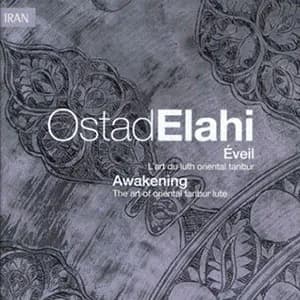
Awakening